
A 3 kW residential installation in Dadhibamanpur
Our Dadhibamanpur project is a 3 kW residential PM Surya Ghar installation. Its photographs show an elevated mounting structure and the inverter with electrical protection equipment. Dadhibamanpur is listed under Cuttack Sadar in the Cuttack district administration’s panchayat directory. View the project profile to see both parts of the installation.
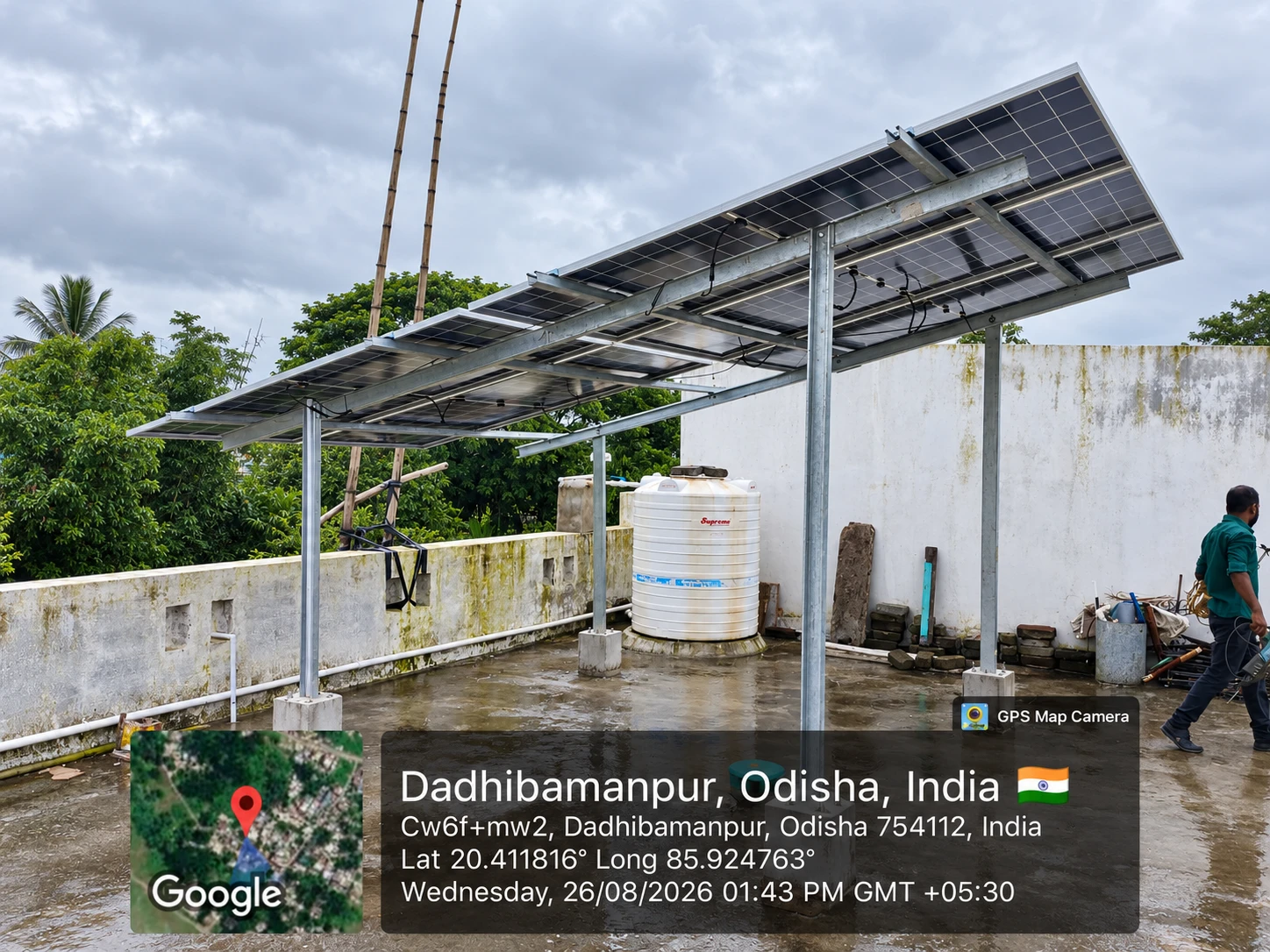
Plan around tanks, access and the roof structure
The Dadhibamanpur photograph shows why a rooftop survey should consider the roof’s existing uses alongside the solar array. Water tanks, parapets and access routes can affect the layout. An elevated structure may provide an appropriate arrangement for a particular roof, but its height, fixing and loads require a site-specific assessment.
Identify the shade-free area, roof condition, drainage and any planned repairs before choosing the mounting arrangement. Keep access to tanks, electrical equipment and maintenance areas in the brief. A qualified project team should assess the supporting structure and wind exposure; the photograph is an installation example rather than a structural design for another building.
Connect the array to the home safely
The inverter, protection devices, earthing and cable route are part of the system design. Agree a suitable equipment location and access for inspection and service. Review the equipment schedule and construction scope in writing so that roof repairs, civil work and electrical changes are identified before installation.
A recent electricity bill helps the team assess consumption and the existing connection. The installed capacity at another home should not determine your proposed system on its own. Read our roof preparation checklist and residential solar guide before arranging the assessment.
Use the utility shown on your electricity bill
For a scheme-linked installation, start with the official PM Surya Ghar portal. Select Odisha, your district and the electricity distribution company shown on the consumer’s bill. Check the vendor listing for that application and follow the required application, inspection and metering process. The Odisha scheme guide explains the documents and stages.
Keep the commissioning records, equipment datasheets, manufacturer warranties and service agreement after handover. HELLOCON’s residential brochure includes a five-year service agreement; module and inverter warranties follow the selected manufacturer and model. The proposal should state service coverage and exclusions clearly.
Arrange a survey from our Bhubaneswar office
Share your Cuttack locality, electricity bill, roof photographs and access information with our Hanspal team. For enquiries received during office hours, our team calls back the same day. The call helps establish the site brief and survey arrangements. It does not replace a roof assessment or the utility’s approval process.
01Which local project can I see?
The Dadhibamanpur profile shows a HELLOCON 3 kW residential PM Surya Ghar installation, with mounting and electrical equipment photographs.
02Does an elevated structure fit every roof?
No. Roof condition, structural support, wind loads, access and shading determine the mounting design.
03Can the array block access to a water tank?
The layout should retain the access required for the roof’s existing equipment, inspections and maintenance. Discuss this at the survey.
04Will I need exactly 3 kW?
Consumption, available roof space, sanctioned load and utility conditions determine the proposed capacity.
05Does the five-year service agreement replace manufacturer warranties?
No. Service support and manufacturer warranty coverage are separate; retain both sets of terms with the quotation.
06Where do I begin the application?
Use the official PM Surya Ghar portal and the utility details on your bill; check vendor eligibility for that application.